

https://my.visme.co/projects/4d8e9pmy-book-talk
Tobler, A., & Herrmann, S. (2013). The rough guide to mindfulness: The essential companion to personal growth. London: Rough Guides
A Little Bit of Mindfulness: An Introduction to Being Present
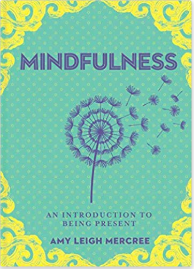
Amy Leigh Mercree introduces mindfulness in very clear and simple sections. She defines what mindfulness is, goes over its history, looks into into the science behind it, distinguishes different types of mindfulness, and provides the reader with guided meditations. Like many other definitions, Mercree defines mindfulness as being present in the moment and becoming more self-aware. She adds that mindfulness also involves the practice of not over reacting to your environment. Mercree states that “today’s hot yoga groups, Mindfulness-Based Stress Reduction (MBSR) classes, and online meditation videos are offshoots of rituals steeped in history” (Mercree, pg. 7). Hinduism, Buddhism, and yoga have rich histories that have influenced what we know as mindfulness today. Vedic traditions stemming from 1500-600 BCE were grouped together and referred to as Hinduism by writers in Great Britain in the 1800s. Vedic traditions such as yoga and meditation are widely used today. Buddhism’s first step in the path to enlighten involves being mindful and to be aware that “any idea or feeling that mindfulness practitioners have is just one though in a sea of other thoughts” (Mercree, pg.8). In the past, yoga was a spiritual practice that involved self-reflection and mindfulness to reach higher levels of enlightenment, but it has evolved into a physical exercise with roots in training the mind. Mecree also credits Dr. Jon Kabat-Zinn with introducing mindfulness to the U.S with his Mindfulness-Based-Stress Reduction (MBSR) classes. People like Dr. Jon Kabat-Zinn at the University of Massachusetts Center for Mindfulness, Dr. Amishi Jha at the University of Miami, Dr. Michael Mrazek at the University of California Santa Barbra, and Dr. Dan Siegel the University of California Los Angeles all study the effects of mindfulness on attention, memory, emotions, and behavior. Mindfulness has shown to reduce stress, manage emotions, improve relationships, enhance working memory, and boost the immune system. In 2016, after analyzing twenty different studies, researchers found that “mindfulness mediation correlates with reduced inflammation, increased immune cell antiaging, and increased antibodies” (Mercree, pg. 23). With studies showing the benefits of mindfulness, schools, businesses, and even the government have adopted mindfulness training programs.
Mercree notes in her chapter on the history of mindfulness, that the word sati is the foundation of mindfulness. Sati, which is the main focus of Buddhism, translates to mindfulness. Though she mentions that when directly translating from Sanskrit, it means to bear in mind. I had not heard of this word or its meaning before and loved that she focused in on this single word. In the section on the different types of mindfulness practice, Mercree presents the Tibetan Buddhist meditation practice of Tonglen. I had never heard of this practice and was pleasantly surprised to find out that it is a technique that can help expand love and kindness within a person. Tonglen is the practice of using breathing exercises to purify an individual’s karma. You start by breathing in your suffering and the suffering of others’ and then breathing out your intentions for those who are suffering. For example, if you are thinking of people without food, you “breath out” food. This was a great book was a great reference for all three of my guiding questions. It touched on the concept of mindfulness, went into its history, and referred to studies that proved how beneficial mindfulness can be.
Mercree, A. L. (2018). A little bit of mindfulness: An introduction to being present. New York, NY: Sterling Ethos.

 My Content Resources